Stablecoin yield farming on Aave, Compound, and Curve
EditLending stablecoins on DeFi protocols pays 3-7% APY with smart-contract risk instead of counterparty risk — the alternative to centralized yield once you understand it.
The honest take
DeFi stablecoin yield is the cleaner alternative to centralized exchange lending — for users who understand what they’re trading off. You replace counterparty risk (Binance, Coinbase, Kraken solvency) with smart-contract risk (the protocol’s code being correct + governance acting in good faith). Yields cluster in the same range (3-7% APY across the major protocols), liquidity is generally same-block, and the protocols you’re using have battle-tested through 2020-2024 stress that wiped out half the centralized lending market.
The catch isn’t yield — it’s operational complexity. A non-trivial slice of users have lost money to contract approvals they shouldn’t have signed, gas-fee mistakes on Ethereum mainnet, depeg events on smaller stablecoins, and the kind of UX errors that don’t exist on a Binance Earn deposit. Realistic yields after gas costs and operational care work out to 2.5-5% net for $1-10K positions on cheaper L2s (Polygon, Arbitrum, Base) and 3-6% net for larger positions where Ethereum mainnet’s gas is amortized.
If you can’t comfortably explain what “approving infinite spending” means and why revoke.cash matters, this category isn’t ready for you. The crypto-basics prereq is real.
What this idea actually is
You deposit stablecoins (USDC, USDT, DAI most commonly) into a DeFi lending protocol via your self-custody wallet (MetaMask, Rabby, hardware wallet). The protocol pools your deposit with other lenders’ deposits and lends them — over-collateralized — to borrowers who put up other crypto as collateral.
Three primary categories:
- Pure lending (Aave, Compound): You deposit USDC; the protocol lends it; you earn interest paid in USDC continuously. Lowest complexity, lowest risk.
- Stablecoin AMM pools (Curve, Uniswap stable pools): You deposit two or more stablecoins into a pool; the protocol uses the pool for stablecoin-to-stablecoin swaps; you earn trading fees + sometimes governance-token rewards (CRV, etc.). Higher yields but adds depeg risk to the stablecoin you’re paired with.
- Yield aggregators (Yearn Finance, Beefy): Protocols that automatically rotate your stablecoin between the highest-yielding venues. Highest convenience, additional smart-contract risk layer.
For most retail allocators in 2026, Aave on Polygon, Arbitrum, or Base is the default pick — battle-tested protocol, low gas, broad asset support, no LP-style depeg complications.
How much you need to start
Realistic capital sizing depends on which chain you use:
- Ethereum mainnet: $10,000+ minimum. A typical deposit + withdraw transaction costs $20-100 in gas. Below $10K, gas eats meaningful share of your year’s yield.
- Polygon, Arbitrum, Base: $500-1,000+ minimum. Gas costs $0.05-1.00 per transaction. Economics work down to small allocations.
- Solana (alternative ecosystem): $200+ minimum. Even cheaper transactions; smaller protocol selection.
For a beginner: start with $500-2,000 on Aave Polygon or Aave Base. Cheap to learn on, fast confirmations, real APY signal. Migrate to mainnet only if your allocation grows past $10K and you want the deepest liquidity pool.
The honest math
Realistic stablecoin lending yields as of 2026 across the major venues:
- Aave (Polygon/Arbitrum) USDC supply: 3.5-5.5% APY base + 0.5-2% AAVE incentives = 4.0-7.5% gross.
- Compound USDC: 3.5-5.0% APY (no incentive boosts in 2026).
- Curve 3pool (USDC/USDT/DAI): 2-4% trading-fee APY + 1-3% CRV emissions = 3-7% gross. Adds depeg risk on each pool stable.
- Aave Ethereum mainnet: Similar APYs but ~$30-60 gas cost on every meaningful interaction.
A $5,000 USDC supply on Aave Polygon at 5% APY pays approximately $250/year, $20.83/month. Deposit + monthly check + occasional withdraw costs ~$2-5/year in gas at Polygon prices. Net yield: ~$245/year, or 4.9% net.
That’s competitive with Binance Earn’s 4-5.5% for USDC. The trade-off:
- Counterparty risk: Binance’s solvency vs Aave’s smart-contract correctness + governance. Different failure modes.
- Liquidity: Both same-day in normal conditions. DeFi has occasional pool-utilization-driven temporary illiquidity (rare).
- Tax accounting: DeFi creates more taxable events (interest paid in different units, liquidity-provider tokens minted/burned). Slightly higher accounting overhead.
What works in 2026
- Aave on a low-gas L2 (Polygon, Arbitrum, Base) for $500-50K positions. Best yield/risk/operational-cost combination for retail.
- Sticking to top-3 stablecoins (USDC, USDT, DAI) only. Smaller stablecoins (BUSD pre-deprecation, FDUSD, lesser-known algorithmic stables) carry depeg risk that’s rarely worth the marginal yield boost.
- Quarterly approval revocation via revoke.cash. Free service, takes 2 minutes, removes spending approvals from contracts you no longer use. Single best operational habit.
- Splitting between Aave and Compound for protocol diversification. Smart-contract risk is real even on battle-tested protocols. Two-protocol splits cost essentially nothing operationally.
- Tracking position via DefiLlama or Zapper. Multi-protocol yield + position dashboards. Useful for tax season and for spotting better-yielding opportunities.
What does NOT work in 2026
- Chasing 15-30% APYs on small protocols. Those rates exist; the protocols offering them have either (a) unsustainable token-emission incentives that decay quickly, (b) hidden risks like rebase mechanics that erode principal, or (c) lower TVL and audit coverage than the top 5 protocols.
- Yield farming on Ethereum mainnet under $10K. Gas costs eat too much of the yield. Either move to L2 or hold on a centralized exchange until your position is large enough for mainnet economics.
- Approving infinite spending on every contract. Default approval prompts often request unlimited spending allowance. Set a finite cap matching your deposit (or use Rabby wallet, which prompts to limit by default).
- Holding LP tokens in algorithmic stable pools. Algorithmic stables (FRAX historically, others currently) have depeg histories and ongoing reserve-quality questions. Stick to USDC/USDT/DAI pools when you do enter LP positions.
- Forgetting about smart-contract risk past “Aave is battle-tested.” Even Aave has had bugs and required emergency governance interventions. Your principal is in code; the code is good but not infallible. Never put your entire stablecoin allocation in one protocol.
Recommended tools
(See affiliate_stack above. Aave + Compound for lending, Curve for stable-pool LP, DefiLlama for cross-checking rates.)
The right call here is treating DeFi stablecoin yield as the non-custodial alternative to centralized lending, sized to roughly match your centralized position with a slight tilt depending on which failure mode you find more concerning. A common diversified setup: 40% Binance Earn, 40% Aave on L2, 20% Coinbase USDC rewards. Compound returns across all three; counterparty exposure spread across two centralized custodians + the DeFi codebase.
For the centralized alternative see USDC lending on Binance Earn. For the prerequisite security setup see /skills/crypto-basics.
ROI calculator
Adjust the inputs to match your situation. Honest math — no hype.
Inputs
Results
Months to recover initial capital from profit alone
Pre-tax. Excludes time-cost of your hours.
AI tools that accelerate this
 Claudeclaude.ai
Task:Read smart-contract approval requests and explain what you're actually authorizing
Caveat: AI summaries miss subtle malicious-contract patterns. Use as a sanity-check, not a replacement for revoke.cash discipline.
Recommended tools
Affiliate disclosure: links may earn TierIncome a commission at no cost to you.
Largest DeFi lending protocol by TVL. Multi-chain (Ethereum, Polygon, Arbitrum, Base) with battle-tested smart contracts. The default DeFi lending venue in 2026.
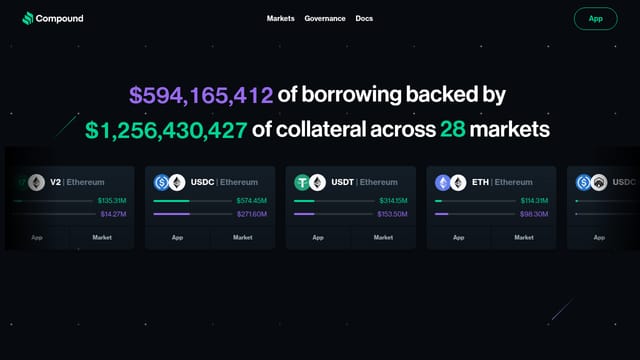
Second-largest DeFi lending protocol. Cleaner UX than Aave for first-time users; somewhat lower yields and narrower asset selection.
Stablecoin-specific AMM with low slippage and yield from trading fees + CRV emissions. Higher yields than pure lending but adds impermanent-loss / depeg risk on stable-pool assets.
Independent tracker of DeFi yields across protocols. Cross-checks any platform's marketing claim against actual on-chain rates. Mandatory due-diligence resource.