DeFi Lending (Aave, Compound)
EditHigher yields than crypto staking, lower risk than yield farming — but smart-contract risk is real and the 2022 cycle proved no protocol is too big to fail.
The honest take
DeFi lending is the most genuinely passive crypto-yield model that scales beyond plain staking. Deposit USDC into Aave; earn 4-8% APY in USDC; repeat. No directional bet on token prices, no liquidity-provision math, no impermanent loss. Just capital deployed into smart-contract-mediated lending markets.
The 2026 reality:
- Aave + Compound are the two protocols that survived 2022’s crash without insolvency or depeg. Smaller protocols (Anchor, Celsius, BlockFi) didn’t. Concentration in proven protocols isn’t fashionable but is rational.
- APYs vary by asset: stablecoins (USDC, DAI, USDT) earn 3-7% in calm markets, spiking to 10-20% during volatility. ETH/BTC earn 0.5-2% (low; not the best DeFi use for these).
- Smart-contract risk is real and silent. Aave / Compound have been audited extensively but no protocol is risk-free. Acceptance of this risk is the price of admission.
- Gas fees on Ethereum mainnet eat small positions. A $100 deposit might cost $5-$30 in gas to move into and out of a position. Layer 2 chains (Arbitrum, Optimism, Base, Polygon) are mandatory for amounts <$5K.
If you have $1K-$10K in stablecoins or majors and accept smart-contract risk, DeFi lending offers better passive yield than crypto staking with lower complexity than yield farming or LP. If you don’t already hold crypto comfortable with self-custody — start with crypto staking first for a simpler intro.
What this is (and what it isn’t)
DeFi lending means depositing crypto assets into a permissionless smart-contract lending pool. Borrowers (other users) take overcollateralized loans against their own crypto; you earn interest from their borrow rates.
What it is:
- Genuinely passive income from capital you’d hold anyway.
- Self-custody throughout — your keys, your tokens, no exchange counterparty risk.
- Composable — your aTokens (Aave deposit receipts) can be used elsewhere in DeFi.
What it is not:
- Risk-free. Smart-contract exploits, oracle manipulation, depeg of underlying stablecoin, regulatory action — all real.
- Comparable to bank savings. No FDIC, no insurance, no central authority.
- Universally cheap to enter. Ethereum mainnet gas makes <$1K positions uneconomical.
How much you actually need to start
| Item | Cost |
|---|---|
| Stablecoin or crypto capital to deposit | $1,000-$10,000 |
| Hardware wallet (Ledger Nano X) | $149 (one-time) |
| L2 chain gas (Arbitrum / Base / Optimism) | $0.10-$2 per transaction |
| Ethereum mainnet gas (only if depositing ETH/BTC) | $5-$50 per transaction |
| MetaMask + DeBank | Free |
Realistic floor: $1,000 capital + $149 Ledger = $1,150 total. Realistic ceiling at this tier: $10,000 split across protocols + chains.
The capital is the meaningful cost. Infrastructure is essentially free.
The honest math
Plug your own numbers below. The defaults assume USDC lending across Aave + Compound on Layer 2:
- $5,000 capital deposited in stablecoins
- 6.5% blended APY — typical for USDC across Aave (4-7%) + Compound (3-5%) in 2026
- 3-year horizon
That gives ~$6,062 in 3 years or ~$354/year at flat APY (no compounding). With monthly auto-compounding (turning back yield into deposit), $5K compounds to ~$6,090.
Compared to crypto staking (3-5% on ETH/SOL): DeFi lending pays similar APY but without volatility of the underlying token. Stablecoin lending = pure yield. ETH staking = yield + token-price volatility.
For someone holding stablecoins as a portfolio cash position, DeFi lending dramatically beats traditional savings (US savings accounts: 0-4%, EU savings: 1-3%). The yield premium offsets some smart-contract risk; the rest you accept as the cost of access.
What works in 2026
The DeFi market consolidated significantly post-2022. The 2026 winners share patterns:
1. Protocol concentration on survivors
Aave + Compound are the two majors that survived 2022 without insolvency, depeg, or governance-token collapse. Smaller protocols may offer higher APY but carry survival risk. Don’t chase 12% APY on unknown protocols — the extra 5% rarely justifies a 5% chance of total loss.
2. Layer 2 chains for capital efficiency
Ethereum mainnet gas is too expensive for amounts <$10K. L2 chains (Arbitrum, Optimism, Base, Polygon) reduce gas to $0.10-$2 per transaction. Aave + Compound run on all major L2s with the same protocol logic.
3. Stablecoin focus
Stablecoin lending (USDC > DAI > USDT for safety) is the cleanest entry. ETH/BTC lending pays 0.5-2% — not worth it; better to stake those.
4. USDC over USDT for safety
USDC is regulated (Circle), audited monthly. USDT (Tether) has historical opacity concerns. The 0.5-1% APY premium for USDT rarely justifies the additional issuer risk.
5. Hardware wallet + minimal browser exposure
Self-custody is non-negotiable at this capital. Hardware wallet signs every transaction. Browser exposure (MetaMask) is the attack surface; minimize via dedicated browser profile or sandboxed setup.
What does NOT work in 2026
- Anonymous high-APY protocols. “30% APY on a new chain you’ve never heard of” — almost certainly insolvent within 12 months.
- Yield aggregators that auto-compound across many protocols. Add complexity + smart-contract layers without proportional yield gain.
- Lending leveraged positions on Aave to chase higher yields. Liquidation risk wipes the gain.
- Custodial yield products (Coinbase Earn, Binance Earn). Lower APY + counterparty risk + regulatory issues.
- Stablecoins on cross-chain bridges as primary holding. Bridge exploits remain a major attack vector ($2B+ stolen 2021-2024).
The 2026 protocol allocation
For a disciplined $5K-$10K position:
- 60% Aave on a Layer 2 (Arbitrum or Base) — primary protocol, most TVL, strongest audits
- 25% Compound on a Layer 2 — protocol diversification + slightly different risk profile
- 15% reserved on Ledger cold storage — not deployed; emergency reserve
Don’t put 100% in any single protocol. Even Aave’s $20B TVL doesn’t make it risk-free.
The recommended stack
For a $1K-$10K tier DeFi lender in 2026:
- Wallet: MetaMask + Ledger hardware wallet (signs every transaction).
- Primary protocols: Aave + Compound on Layer 2 (Arbitrum or Base).
- Portfolio tracking: DeBank (free) — see all positions at a glance.
- Bridge: Hop, Across, or Stargate for moving stablecoins between chains. Avoid bridging ETH directly — wait for native asset issuers to release on each chain.
- Stablecoin: USDC primary, DAI as MakerDAO-decentralized backup.
Who this is for
- Someone with $1,000-$10,000 in crypto (or willing to acquire it as part of a broader portfolio).
- Someone with basic DeFi familiarity — has used MetaMask, understands wallets/keys, can sign transactions.
- Someone comfortable with self-custody risk + smart-contract risk as the price of higher yields.
- Someone in a jurisdiction where crypto is legally usable (most of EU, UK, Singapore, etc.).
Who this is NOT for
- Anyone who hasn’t already used a software wallet. Start with crypto staking first.
- Anyone who’d panic if their wallet shows a 30% temporary loss (smart-contract exploits cause these spikes).
- Anyone needing capital back fast — DeFi positions can be locked during stress events.
- Anyone in jurisdictions with hostile crypto regulation. US increasingly restrictive.
First 30-day action plan
Week 1: setup + small test deposit
- Days 1-2: Order Ledger Nano X if not owned. Set it up, save seed phrase securely (paper, not digital).
- Days 3-4: Install MetaMask, connect Ledger. Test signing a small transaction (e.g., send $5 to a wallet you control).
- Days 5-7: Bridge $200 USDC from a CEX (Coinbase, Kraken, Binance) to Arbitrum or Base via official bridge. Pay the gas; learn the flow.
Week 2: first deposit
- Days 8-10: Deposit $200 USDC into Aave on Arbitrum. Verify aUSDC tokens appear in your wallet. Verify yield accrues hourly via DeBank.
- Days 11-14: Watch yield accumulate. Withdraw $50 to test withdrawal flow. Pay attention to gas + slippage + delays.
Week 3: scale + diversify
- Days 15-21: Bridge majority of capital ($3K-$8K). Split: 60% Aave, 25% Compound, 15% leave on Ledger as reserve.
Week 4: tracking + tax
- Days 22-25: Set up DeBank dashboard. Track positions weekly.
- Days 26-28: Sign up for tax-tracking tool (Koinly, CoinLedger). Connect wallet addresses for automatic transaction history.
- Days 29-30: Don’t touch the position. Most successful DeFi yields require leaving positions alone.
By end of month: first month of yield earned, position stable, tracking active.
Realistic milestones
| Time horizon | What you should expect |
|---|---|
| Month 1-3 | Earn $20-$170 (depending on capital + APY) |
| Year 1 | $200-$700 net yield on $5K-$10K |
| Year 3 | Compounded position 18-22% larger from yield alone |
| Year 5+ | Steady passive yield as long as protocol viability holds |
What can kill it
- Smart-contract exploit. Low probability per protocol per year (~1-3%) but catastrophic if it happens. Mitigation: protocol diversification.
- Stablecoin depeg. USDC came close in March 2023 (briefly broke peg to 0.88). Recovered within 24h but was scary. Mitigation: don’t chain stablecoin into riskier instruments.
- Regulatory action. EU MiCA, US SEC actions. Risk asymmetric — won’t crash overnight, but could restrict access.
- Bridge exploits. $2B+ stolen 2021-2024. Mitigation: minimize cross-chain exposure; use native L2 deposits where possible.
- Operational mistake. Sending tokens to wrong address (irrecoverable), approving malicious contract. Mitigation: hardware wallet review every transaction.
The compounding case
A disciplined DeFi lender with $5K-$10K capital, USDC positions across Aave + Compound on L2, blended 5-7% APY over 3-5 years, ends with 20-30% capital growth beyond starting principal — entirely passively, with maybe 30 minutes of monthly review.
For someone with crypto-familiar comfort, this is the cleanest yield-on-cash strategy in 2026. Better than US savings accounts (3-4%), better than EU savings (1-3%), better than short-duration Treasury bills (4-5%) — at the cost of smart-contract risk and 1-2 hours of initial setup.
For someone without DeFi comfort, the alternative is dividend stocks (similar yield, traditional finance, lower complexity) or crypto staking (lower yield but simpler entry).
Dividend portfolio calculator
Adjust the inputs to match your situation. Honest math — no hype.
Inputs
Results
Assuming dividends reinvested at same yield. Excludes price appreciation.
Recommended tools
Affiliate disclosure: links may earn TierIncome a commission at no cost to you.
Largest DeFi lending protocol globally by TVL ($15-20B in 2026). Multi-chain (Ethereum, Polygon, Avalanche, Optimism, Arbitrase, Base). Battle-tested through 2022-2024 stress without depeg or insolvency. Default starting venue.
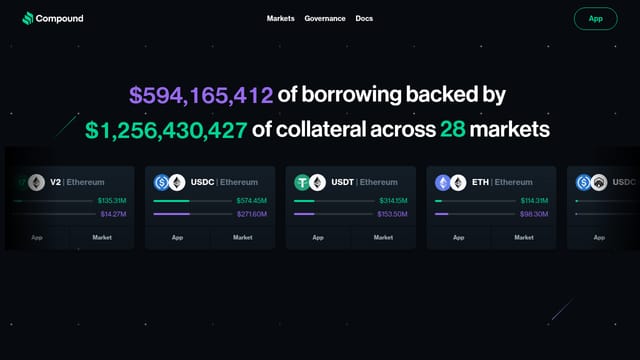
Original DeFi lending protocol (2018). Smaller than Aave by TVL but cleaner UX, simpler risk model. Worth using alongside Aave for protocol diversification.

Self-custody wallet that connects to DeFi protocols. Good fiat on-ramp + DeFi UX bridge for new users. Avoid Coinbase exchange's own custodial DeFi product (different + more limited).
Most popular self-custody crypto wallet. Required for direct DeFi interaction. Pair with hardware wallet (Ledger) for amounts >$1K.
Hardware wallet for the keys controlling DeFi positions. NEVER do DeFi with a software-only wallet at $1K+. Single biggest risk reduction in this space.
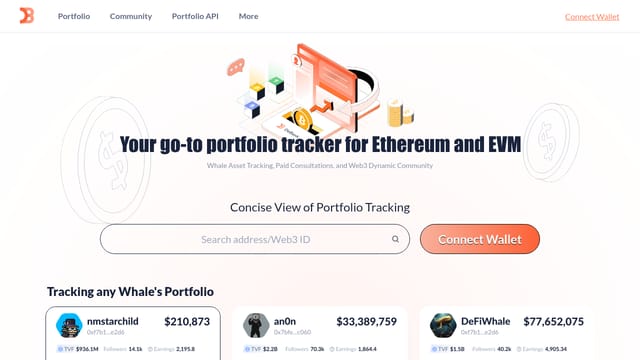
Portfolio tracker for DeFi positions across protocols + chains. Real-time net worth, yield breakdown, transaction history. Industry-default DeFi dashboard.

On-chain analytics for tracking smart-money flows + protocol health. Worth subscribing once portfolio exceeds $20K — early warning signal for protocol stress.