Domain Investing
EditBuying digital real estate at $10 a parcel and selling years later for $1,500. The model still works in 2026 — but the base rate of success is brutally low.
The honest take
Domain investing is one of the most misunderstood passive-income models on the internet. The headlines you see — “I bought this domain for $12 and sold it for $40,000” — are real, but they’re survivorship bias. The same person almost certainly has 200 domains they paid $12 for that nobody will ever buy.
Here’s the actual base rate: about 1-2% of well-selected hand-registered domains sell in any given year, at an average price of $1,500-$5,000. The rest sit in your account, accumulating $9-15/year in renewal fees, until you drop them or get lucky.
Done badly, domain investing is a slow capital-burn. Done well, it’s a true passive asset class — buy once, hold for years, monitor occasionally, sell on inbound inquiry.
The difference between “done badly” and “done well” is mostly discipline at the buy step. We’ll cover the buy framework below.
What this is (and what it isn’t)
Domain investing is buying domain names — typically .com, .io, .ai, or country-code TLDs — at registration price ($9-$50) or via auctions ($20-$10,000) and reselling them later for higher prices to end users.
What it is:
- A high-variance, low-correlation asset class that can complement other portfolios.
- Genuinely passive after the buy decision is made — no ongoing work besides annual renewals.
- A pursuit where research skill compounds: your 1000th domain decision will be much better than your 10th.
What it is not:
- A guaranteed return. Most individual domains never sell.
- A get-rich-quick scheme. The median time-to-sale for a hand-registered domain is years, not months.
- A pure “passive” play if you do it right. Discipline at acquisition is non-negotiable, and that’s active work.
The three strategies
1. Hand-registration (“hand-reg”)
Buy unregistered names at standard registration price ($9-15). High volume, low individual cost, very low base rate of sales (typically 0.5-1.5% per year), but the math works because your downside per name is bounded.
Best for: beginners with $200-$500 to start, willing to register 30-50 domains over time and renew the keepers.
2. Expired-domain auctions
Domains that expire at registries get released through a 75-day cycle. The good ones get auctioned by GoDaddy, NameJet, Snap, Dynadot, etc. before re-entering the registration pool. You bid alongside other investors. Prices range from $20 to $10,000+.
Best for: intermediate investors with $1,000-$5,000 to deploy and the patience to lose 80% of bids.
3. Aftermarket sniping
Buying from other investors who priced their domains too low. Requires deep market knowledge — you’re betting your appraisal is better than theirs. High capital requirement, narrow margin, but real edge for specialists.
Best for: experienced investors with $5,000+ and proven appraisal skill. Skip this if you’re starting.
For the $100-$1K tier covered by this page, focus 100% on hand-registration. Auctions become viable once you have $1,500+ to deploy comfortably.
What you actually need to start
| Item | Cost |
|---|---|
| 30 hand-registered domains × $9 | $270 |
| Estibot subscription (optional, monthly) | $19 |
| GoDaddy auction account (free) | $0 |
| Sedo + Afternic listings (free) | $0 |
| Atom (formerly Dan) listings (free for sellers) | $0 |
| Annual renewals (year 2 onwards on the keepers) | $9-15/domain |
Realistic floor: $300 for the first year + $150-200 in renewals annually. Realistic ceiling at this tier: $1,000 if you’re using paid appraisals or buying a few small auctions.
The capital recycling is what makes this tier work: a single sale at $1,500 (the average aftermarket sale on a quality hand-reg) covers years of renewals across your entire portfolio.
The honest math
The calculator below assumes:
- $600 capital deployed (about 60 hand-reg domains over a year).
- $100/month average revenue at steady state — one $1,200 sale per year on a typical hand-reg portfolio.
- $50/month costs — renewals on the kept domains plus listing fees.
That’s a ~100% annualized ROI on capital deployed if your buy discipline is good. If your buy discipline is bad, you can lose your entire capital — there’s no floor on a domain that nobody wants to buy.
What works in 2026
The market shifted hard in 2023-2025. The AI boom pulled almost all attention toward two-word brandable .coms, single-word .ai/.io domains, and short numeric premium .coms. Generic keyword-domain investing — buying “best-coffee-makers.com” type domains — is dead at the retail level.
What’s working in 2026:
1. Brandable two-word .coms (5-7 letters each)
Names like “Voltary”, “Kindro”, “Pieta”, “Quivex” — words that sound like a startup brand even if they’re not real words. The AI funding boom created a steady firehose of new startups looking for clean .com identities, and they pay $1,500-$5,000 for the right name without much haggling.
2. AI/ML keyword domains in .ai
The .ai TLD prices shot up in 2024-2025 (renewal $99-180/year). Domains containing “AI”, “ML”, “GPT”, “agent”, “model”, “stack”, “studio”, “lab” trade well in the $300-$3,000 range.
For the full economic analysis of .ai as a 24-36 month speculative window — hits-business math, exit strategy, and why this is not the same business as .com brandable investing — see the dedicated .ai TLD domain investing breakdown.
3. EU-relevant .com domains
EU startups still default to .com when they can. Names that work for EU consumer/SaaS audiences — bilingual-friendly, regulator-friendly framing (“private”, “secure”, “vault”, “ledger”) — are quietly liquid.
4. Short numeric .coms (4-letter, 5-number)
LLLL.com (4-letter pronounceable), NNNNN.com (5-number) trade like a commodity. Volume play, lower margins per sale, but extremely fast turnover at the right buy price.
5. Trademark-clean recovery on dropped expired domains
Established domains that expired due to registration accidents — confirmed by checking Wayback Machine for prior business use AND a clean trademark search — can be picked up at expired-auction prices and resold to brand-builders or rebuilt as content sites.
What does NOT work in 2026
- Long keyword .com domains. “Cheap-online-marketing-tools.com” had a market in 2010. It has none in 2026.
- Other-TLD speculation outside .ai/.io/.app/.dev. .biz, .info, .co, .me — most have no liquid resale market.
- Trademark-bordered names. “ApplePhones.com”, “TeslaParts.com” — at best ignored, at worst sued. Always run a USPTO trademark search before purchase.
- Generic emotional buys. Buying because the name “feels cool” without market evidence.
- Domain “appraisal services” that quote you $5,000+ on a hand-reg. They’re selling you false hope. Real value is what an end user pays, not what a tool says.
The 2026 buy criteria
Before you register or bid on any domain, every name should pass all four:
- It’s a real-word .com (1-2 words, 5-12 letters total) OR a brandable in .com/.ai/.io. Other TLDs are auto-pass for now.
- It has no exact-match trademark in the niche where it would naturally apply. Free check: USPTO TESS database + Google.
- It would plausibly fit a startup, SaaS, app, or product launch. Imagine the logo + the homepage — does it feel real?
- You can articulate which specific industry would pay $1,500+ for it without your help. “Maybe someone might want it” is not enough. “A workflow SaaS startup would pay $1,500-3,000 for this” is.
If a domain doesn’t pass all four, don’t buy. The discipline at the buy step is what separates the 5% of investors who profit from the 95% who burn capital.
The recommended affiliate stack
The “Recommended tools” panel below has the registrars and marketplaces that actually matter. A few notes on which to use when:
- Namecheap for the bulk of your hand-registered .coms and country-code TLDs. Cheapest renewal prices, clean UI, no upselling.
- GoDaddy Auctions for expired-domain bidding when you’re ready to scale beyond hand-reg.
- Sedo + Afternic as your primary sales listings — list every keeper on both. Atom (formerly Dan) for brandable-specific names.
- ExpiredDomains.net is free and irreplaceable for building drop-watch lists. Spend an hour here weekly once you have a feel for the market.
We don’t recommend Squadhelp’s marketplace listings as a primary channel — fees and conversion friction are high. Sedo + Atom + Afternic cover 95% of the inbound buyer flow.
Who this is for
- Someone with $300-$1,000 in disposable capital they can lock up for 1-3 years.
- Someone who finds language, branding, and market trends genuinely interesting — domain investing is essentially applied taxonomy.
- Someone with patience for variance. Three months of zero sales followed by a $4,000 sale is the normal rhythm, not the exception.
- Someone willing to read the trade press (DNJournal weekly sales report, NamePros forum) to develop calibration.
Who this is NOT for
- Anyone with cash they can’t afford to lock up for 12-24 months.
- Anyone who hates research or spreadsheets. Tracking your portfolio’s stats and the broader market is core to the work.
- Anyone who falls in love with domains. Emotional buying is the #1 failure mode.
- Anyone in jurisdictions with strict speculative-asset taxation that erodes margins below break-even (check local rules).
First 30-day action plan
Week 1: market calibration
- Days 1-3: Read the DNJournal weekly sales report for the past 6 months. Note recurring patterns — what types of names sold, at what prices.
- Days 4-7: Read 30-50 threads on NamePros’ “Sales reports” forum. Calibrate your sense of what a “good buy” looks like vs a “delusional listing”.
Week 2: build your buy list
- Day 8: Sign up for ExpiredDomains.net (free) and create your first watch list filters: 5-12 letter, .com only, no numbers/hyphens, with the “Brandbucket-style” or “single word” filter on.
- Days 9-12: Brainstorm 50 hand-reg candidates that pass your 4-box framework. Use a notebook or Notion — list candidate, why it could sell, who’d buy it.
- Days 13-14: Filter the 50 down to your 15-20 best candidates. Run trademark checks on each.
Week 3: register and list
- Day 15: Register the 15-20 keepers at Namecheap. Total spend: ~$135-$180.
- Days 16-18: Set up Sedo and Afternic seller accounts, push every domain to both. Set “make-offer” pricing — don’t BIN-price hand-regs above $2,500.
- Days 19-21: Create Atom (Dan) seller account, list the brandable subset there too.
Week 4: distribution and learning
- Days 22-24: Set up DNS forwarding to a clean “for sale” landing page on each domain (Sedo and Dan provide free ones).
- Days 25-28: Browse GoDaddy expired auctions daily. Don’t bid yet — just calibrate your sense of which auctions close where, and watch the post-auction sell-through.
- Days 29-30: Audit your portfolio. For each domain, note your exit price target, the buyer-type that would pay it, and a 24-month deadline for keep-or-drop.
By end of month: 15-20 domains live across 3 marketplaces, dollar exposure $135-$180, calibration meaningfully improved.
Repeat the cycle every 2-3 months. By month 12, you’ll have 50-80 listings across the marketplaces and a genuine portfolio.
Realistic milestones
| Time horizon | What you should expect |
|---|---|
| Month 1-3 | First 15-20 listings live, 0 sales, lots of learning |
| Month 4-6 | Maybe 1 small sale ($300-$1,000) on a lucky brandable |
| Month 7-12 | 1-3 sales total, average $1,200-$2,500 each |
| Year 2 | 3-6 sales/year, portfolio of 60-100 active listings |
| Year 3+ | Steady-state: 5-10 sales/year, clear winners and clear dogs to drop |
The variance is wild. Some investors hit a $15,000 sale in their first 6 months and conclude they’re geniuses. Others go 18 months with no sale and conclude domain investing is dead. Both are wrong. The base rate dominates over years, not months.
What can kill it
- Forgetting to renew a winner. Set autorenew on all keepers. Sounds basic; happens to people every year.
- Buying outside the criteria when “the name sounds cool”. Discipline at acquisition is the whole game.
- Listing at delusional prices. A “make offer” listing converts more often than a $25,000 BIN on a hand-reg.
- Failing to clear trademarks. A single trademark-infringing buy can wipe out your year’s profit on registrar suspension fees and legal hassle.
- Treating it as your primary income. Variance is too high. Treat it as a secondary stream alongside a more predictable one.
The compounding case
A disciplined hand-reg investor with $300/year in fresh capital and steady portfolio renewals reaches roughly $4,000-$10,000 in annual sales by year 3-4. The marginal cost of holding the portfolio is small (renewals on keepers ~$300-$500/year), so net margin is 80-90%.
That’s not a YouTube-thumbnail story. It is a defensible 4-figure annual income on $1,000 of accumulated capital, with maybe 10 hours of work per month, that grows linearly with capital and skill. For the right person, that’s a fair trade.
If you’re that person, register your first batch this month. If you’re not — pick something else from this site. There’s no shame in that.
ROI calculator
Adjust the inputs to match your situation. Honest math — no hype.
Inputs
Results
Months to recover initial capital from profit alone
Pre-tax. Excludes time-cost of your hours.
Recommended tools
Affiliate disclosure: links may earn TierIncome a commission at no cost to you.
Cheapest mainstream registrar. The default place to register .com handles for under $9/year. Your registrar of record for the bulk of your portfolio.
Largest expired-domain auction marketplace. Pre-release auctions are where most expired-domain inventory flows. You'll spend a lot of time here.
Largest aftermarket sales platform globally. List your domains here for passive sales. Buyer-side fee structure makes them attractive to enterprise buyers.
Brandable-domain marketplace. If you focus on hand-registered brandable .coms, list here for premium pricing and buyer-friendly checkout.
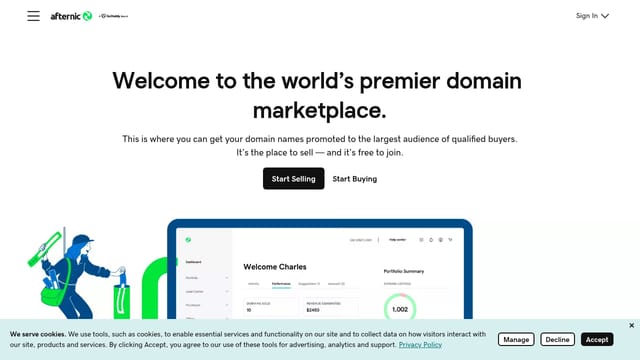
GoDaddy-owned aftermarket. Wide distribution network — your domain shows up on dozens of registrar checkout flows. Use alongside Sedo, not instead of.
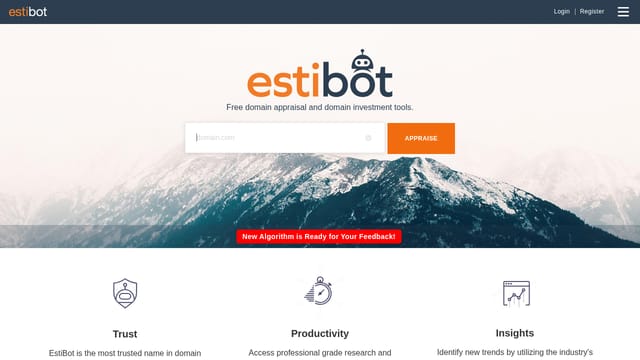
Automated domain appraisal. Imperfect but the industry-standard quick check. Use for filtering, not for setting prices.
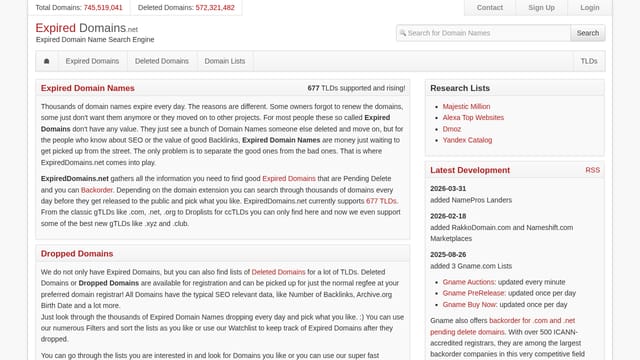
Free database of dropping domains with metrics. Where you build your own buy lists. The single most useful tool for the cost ($0).