Kit vs Beehiiv vs Mailchimp: head-to-head feature comparison (2026)
EditThree platforms, three very different bets on what email newsletters are. This breaks down pricing, deliverability, automation, and monetization side-by-side — without picking a single winner.
TL;DR (the honest verdict)
Pick Kit (formerly ConvertKit) if: you’re building a creator/affiliate audience, you want the cleanest automation builder, and you’ll likely stay free for 6-12 months while you grow.
Pick Beehiiv if: you intend to monetize through paid subscriptions, sponsorships, or a referral program — basically, if the newsletter itself is the product, not the funnel for something else.
Pick Mailchimp if: you’re locked into a legacy stack or a client requirement. Otherwise, no — its 2024-2025 redesign and pricing changes pushed it out of the top tier for both creators and serious newsletters.
If you want one sentence: Kit for content sites, Beehiiv for newsletter-as-product, Mailchimp only if forced.
Quick comparison table
| Kit (Creator) | Beehiiv (Launch / Scale) | Mailchimp (Standard) | |
|---|---|---|---|
| Free tier | Up to 10,000 subs | Up to 2,500 subs | Up to 500 contacts |
| Pricing at 5K subs | $79/mo | $49/mo (Launch) | ~$75/mo (Standard) |
| Pricing at 25K subs | $179/mo | $99/mo (Scale) | ~$295/mo |
| Automation builder | Best in class | Good (improving fast) | Fine, getting clunky |
| Paid subscriptions | Limited (Commerce) | Native, full-featured | No |
| Referral program | Add-on | Native | No |
| Sponsorship marketplace | No | Yes (BeehiivAds) | No |
| Affiliate program (yours) | 30% recurring 24mo | 50% first + 20% recurring | None |
| Deliverability (2026) | Excellent | Excellent | Mixed |
| Best for | Creator/affiliate sites | Paid newsletters | Legacy / e-commerce |
The honest take
Newsletter platforms in 2026 split into three philosophies:
- Kit’s bet: the email list is the audience asset. The platform is invisible; the focus is automation that nurtures readers into customers of something else.
- Beehiiv’s bet: the newsletter is the product. The platform should monetize the newsletter directly through paid subs, sponsors, and growth tools.
- Mailchimp’s bet: generic email marketing for small businesses. Less creator-focused, more e-commerce-broadcast oriented.
Choose your platform by which philosophy matches your model. Don’t pick the platform first and force your strategy to fit.
Kit (formerly ConvertKit): the creator’s automation engine
Kit (rebranded from ConvertKit in 2024) is the platform most professional content creators end up on after testing the others. Its strengths are deeply specific:
Where Kit wins
- Generous free tier. Up to 10,000 subscribers free. This is enormously generous compared to almost every alternative. You can run a serious affiliate site for a full year without paying.
- Automation builder. Visual, intuitive, and deeply tag-based. You can build sophisticated subscriber-journey logic without enterprise-tier pricing.
- Forms and landing pages. Native, well-designed, easy to embed.
- Tag/segment-based architecture. Subscribers can have multiple tags, and segments are computed dynamically. This is the right model for content businesses.
- Affiliate program. Pays 30% recurring commission for 24 months on every paid signup you refer. For affiliate sites, this is one of the highest-LTV affiliate programs available — a single Kit signup at the $79/mo tier pays you ~$23/mo for 2 years.
Where Kit loses
- Paid subscriptions feature is basic. Kit Commerce can do paid newsletters, but it’s not built for that as a primary model. Beehiiv crushes Kit on paid-newsletter tooling.
- Pricing scales steeply. At 25K subs you’re paying $179/mo. This is fine for a profitable business, painful for a side project that’s growing but not yet earning.
- Templates are basic. Email design is functional, not gorgeous. The Beehiiv editor produces visually nicer broadcasts out of the box.
- No native sponsorship marketplace. If you want to sell sponsor slots, you do it manually.
Who Kit is for
- Affiliate site operators driving subscribers from SEO content.
- Course creators with a launch-driven funnel.
- Indie creators who want clean automation without paying enterprise prices.
- Anyone whose email list is a channel, not the product.
Beehiiv: the paid-newsletter native
Beehiiv launched in 2021 and has spent the last 4 years building exactly the platform that Substack and Mailchimp didn’t: a creator-friendly, monetization-first newsletter platform with native referral programs and a sponsorship marketplace.
Where Beehiiv wins
- Paid subscriptions are first-class. Native paywall logic, member-only sections, easy upgrade/downgrade flows. If you’re building a paid newsletter, Beehiiv is meaningfully ahead.
- Native referral program. Subscribers refer other subscribers, get rewards. Beehiiv built this in (Morning Brew-style growth) without needing third-party tools.
- BeehiivAds sponsor marketplace. Beehiiv has a built-in marketplace where advertisers buy slots in newsletters. For newsletters above 5K subs, this can be meaningful revenue without your own sponsor sales.
- Pricing. Cheaper than Kit at scale. $49/mo for up to 5K subs (Launch tier) vs Kit’s $79/mo.
- Editor and templates. Visually polished out of the box. Modern, clean, branded easily.
- Affiliate program. Pays 50% of first payment + 20% recurring. Solid economics if you’re recommending newsletter platforms.
Where Beehiiv loses
- Automation is less mature. Improving rapidly, but Kit’s automation builder is still better for complex multi-step subscriber journeys.
- Tag system less sophisticated. Adequate for most cases, behind Kit if you need fine-grained segmentation.
- Smaller free tier. 2,500 subscribers free vs Kit’s 10K.
- Mostly newsletter-shaped. If you want to run drip courses, automation-heavy onboarding flows, or non-newsletter email marketing, Kit is better suited.
Who Beehiiv is for
- Paid newsletter operators (especially anyone planning a $5-$20/mo subscription).
- Newsletter-first businesses where the email is the product.
- Operators who want a referral growth loop without third-party tooling.
- Newsletters above 5K subs that want sponsorship monetization.
Mailchimp: the legacy choice (and why we don’t recommend it for new creators)
Mailchimp pioneered modern email marketing and was the default recommendation for most of the 2010s. In 2024-2025 it underwent two changes that made it less attractive for content creators:
- Pricing restructure. Mailchimp now charges based on total contacts (not just active subscribers), which inflates cost as your list ages.
- Feature emphasis shift toward Intuit’s broader e-commerce suite. Mailchimp was acquired by Intuit (QuickBooks parent) in 2021, and the product roadmap has clearly shifted toward small-business e-commerce email rather than creator/newsletter use cases.
Where Mailchimp still works
- Existing setups with complex e-commerce integrations.
- Teams already comfortable with Mailchimp’s interface and unwilling to migrate.
- Specific e-commerce flows where Mailchimp has deep Shopify/WooCommerce integrations.
Where Mailchimp falls short in 2026
- More expensive than Kit at most scale points.
- No paid newsletter functionality.
- Automation builder less mature than Kit’s.
- Creator/affiliate focus largely abandoned.
- No affiliate program for you to monetize recommendations.
We’re not saying Mailchimp is bad. We’re saying that for the specific use cases this site cares about — affiliate marketers, paid-newsletter operators, content creators — there’s no scenario where Mailchimp is the best choice in 2026.
Decision matrix
| If you’re building… | Pick |
|---|---|
| An affiliate site with email capture and product launches | Kit |
| A paid newsletter (subscription model) | Beehiiv |
| A free newsletter that may take sponsorships eventually | Beehiiv |
| A free newsletter that drives traffic to a course or product | Kit |
| A blog with simple “subscribe to new posts” | Either, but Beehiiv is cheaper |
| An e-commerce-driven email program | Mailchimp (or Klaviyo) |
| A small client project with existing Mailchimp account | Stay on Mailchimp |
| A list of <500 subs and unsure of monetization | Kit free tier — most flexibility |
Migration considerations
All three platforms support import/export. Migrating between them is annoying but not catastrophic. A few notes:
- From Mailchimp to Kit/Beehiiv: straightforward CSV export + import. Tags and groups don’t always map cleanly; expect 30-60 minutes of cleanup.
- From Kit to Beehiiv: Beehiiv has a Kit-specific importer that preserves segments. The reverse direction is rougher.
- From Beehiiv to Kit: possible but loses some referral-program metadata and paid-subscription history. If you’ve built referral mechanics on Beehiiv, the migration is essentially destructive on that dimension.
The migration friction is asymmetric: easier to leave Mailchimp than to leave Beehiiv with paid subs. Pick with that lock-in in mind.
Common questions
Can I switch later without losing subscribers?
Subscribers can move. Tags, segments, automations, and paid-subscription state are harder. Plan for 2-4 hours of platform-specific rebuilding if you migrate.
Will email deliverability differ?
In 2026 all three have excellent deliverability for legitimate senders. Differences appear mostly at the margins (large list, irregular sending patterns). Beehiiv has had occasional deliverability bumps in 2024 due to rapid growth; Kit has been steady; Mailchimp has been steady but slightly less attentive to creator-specific complaints.
What about Substack?
Substack is a publishing platform, not a newsletter platform — your subscriber list is partially Substack’s, not yours. For affiliate sites and serious creator businesses, that’s a meaningful concession we don’t recommend. Beehiiv competes directly with Substack and gives you full ownership.
What about Ghost?
Ghost is excellent if you’re technical and want self-hosted control. It’s a different category — a CMS+newsletter platform. Worth evaluating if you’re already running content on a separate platform and want to consolidate.
The actual recommendation
For most readers of this site:
- Starting from zero with an affiliate site: Kit free tier. Migrate to paid (or to Beehiiv) when you cross 5K subs and have a clearer monetization path.
- Starting a paid newsletter: Beehiiv from day one. The native paywall and referral mechanics are 6-12 months of dev work you’d otherwise have to recreate.
- Already on Mailchimp and unhappy: Migrate. Use Beehiiv if your model is newsletter-first; use Kit if your model is automation-heavy.
The platform should disappear from your daily attention. All three eventually do. The question is which one disappears in the way that compounds your business.
Action plan
- If you’re starting fresh today: Pick based on your model — Kit for affiliate sites, Beehiiv for paid newsletters. Sign up on the free tier. Spend 2 hours setting up your first form, welcome sequence, and a single broadcast.
- If you’re already running a list and considering migration: First, inventory what you’d lose (automations, segments, paid subs). Estimate the migration cost. Migrate only if the lifetime savings or feature gain materially exceeds 8-16 hours of rebuilding.
- If you’re recommending newsletter platforms in your own affiliate content: Lead with Kit for creator-audience content, Beehiiv for monetization-focused content, and skip Mailchimp recommendations unless your specific audience has e-commerce needs.
The newsletter platform you pick today probably stays with you for 3-5 years. Worth getting right.
Recommended tools
Affiliate disclosure: links may earn TierIncome a commission at no cost to you.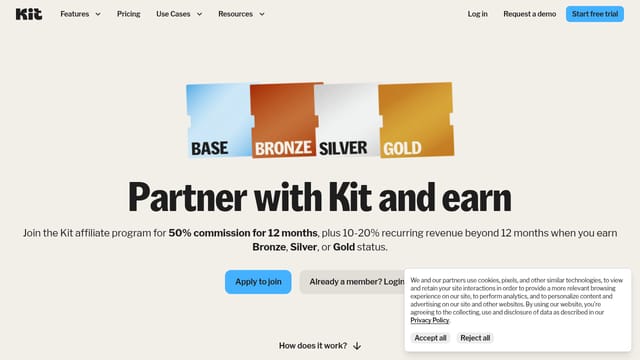
The creator-first platform with the cleanest automation builder, the most generous free tier, and recurring affiliate income that actually compounds for content sites.
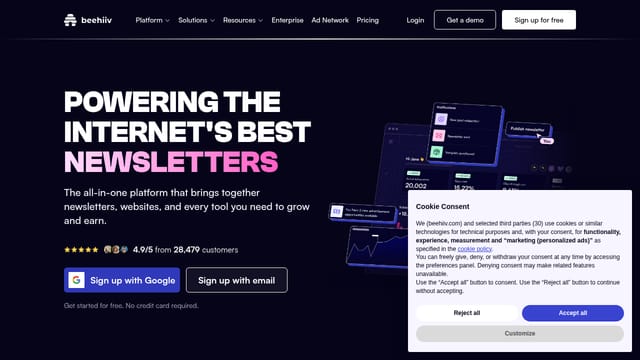
The platform built for paid newsletters from day one. Best monetization tools (subscriptions, sponsorships, referral programs) and fastest growth in 2024-2025.
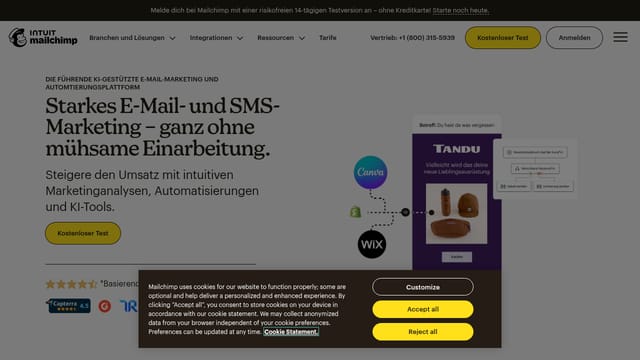
Included as a comparison anchor only. If a client or legacy stack already runs on Mailchimp, fine. If you're starting fresh in 2026, neither Kit nor Beehiiv is worse.